5 Hidden Features of the Neverstop Laser Mfp 1202W You Must Know About
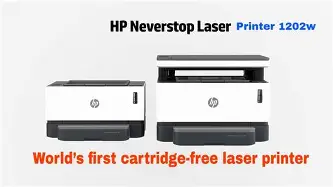
The landscape of home office and small business printing underwent a significant shift with the introduction of the world’s first toner tank system. While most users are familiar with the concept of thermal inkjet tanks that utilize high-capacity bottles, the transition of this technology into the laser category has been spearheaded by specific models designed to eliminate the frustrations of traditional cartridges. The Neverstop Laser Mfp 1202W is not merely a printer; it is a declaration of independence from the expensive, plastic-heavy cycle of standard toner replacements. While its primary selling point—the reloadable toner tank—is well-advertised, there are several nuanced capabilities and design choices that often go overlooked by the casual buyer.
In an era where efficiency and sustainability are increasingly prioritized, this device bridges the gap between high-volume professional needs and the logistical simplicity required by remote workers. By examining the intricacies of its hardware and the logic of its software integration, one can find a tool that is far more versatile than its minimalist white-and-grey exterior suggests. This article explores the depths of this machine, identifying five specific hidden features and operational efficiencies that elevate it above standard entry-level laser multifunction printers.
Detailed Product Analysis: The Engineering of Efficiency
At its core, the Neverstop Laser Mfp 1202W is a monochrome multifunction printer (MFP) that handles printing, scanning, and copying. However, to view it through the lens of traditional MFPs is to miss the fundamental engineering shift it represents. Unlike standard laser printers where the toner and the drum are often housed in a single, disposable unit, the Neverstop architecture separates these components to maximize the lifespan of the imaging drum. The drum is rated for a substantial 20,000 pages, while the toner is added via a specialized reload kit that looks more like a large syringe than a cartridge.
The hardware is built for durability. While many consumer-grade printers feel flimsy, the 1202W has a certain industrial heft. This sturdiness is necessary to support the pressure required during the toner injection process. Furthermore, the internal paper handling mechanisms are designed to mitigate the heat-related curling often seen in high-speed laser printing, ensuring that even when printing a 50-page report, the final sheets remain as flat and professional as the first.
Buyers typically narrow their focus to the initial cost of the hardware, but the 1202W is designed for those who look at the "Total Cost of Ownership" (TCO). By reducing the waste associated with plastic cartridge shells and lowering the cost per page to a fraction of a cent, the device addresses the primary pain point of laser printing: the "razor and blade" business model. This analysis reveals a machine that is less about selling you a peripheral and more about providing a long-term utility.
1. The Precision Toner Level Sensor and "Low-Toner" Intelligence
One of the most innovative yet understated features of the 1202W is the front-facing, physical toner level indicator. While most printers rely on software estimates based on "pixel counting," which can be notoriously inaccurate, the Neverstop series uses a sophisticated internal sensor system. This isn't just a digital readout on a screen; it is a tiered light-bar system integrated into the chassis of the printer itself. This allows a user to glance at the machine from across the room and know exactly how much "fuel" is left in the tank.
What is truly "hidden" about this feature is the smart lockout mechanism. The printer will not actually allow you to inject a reload kit unless the tank is at a level that can accommodate the full volume. This prevents the messy overflows and mechanical jams that plague third-party refillable systems. It is a foolproof safeguard that ensures the internal air pressure and toner density remain optimal for print quality. For a busy office administrator, this means no more guessing whether a half-used reload kit will fit; the machine tells you exactly when it is ready to receive more toner.
2. The Seamless Scan-to-PDF Compression Algorithms
While most users focus on the "Laser" part of the name, the "Mfp" (Multifunction Printer) capabilities include a flatbed scanner that punch significantly above its weight class. Hidden within the software stack of the 1202W—accessible via the associated mobile and desktop applications—is a highly efficient compression engine specifically tuned for text-heavy documents. When scanning a multi-page contract, the device doesn't just capture an image; it applies a logic-based filter that identifies text glyphs and separates them from the background.
The result is a PDF file that is remarkably small in terms of digital footprint but retains high-contrast clarity. This is essential for professionals who must upload documents to portals with strict file-size limits, such as legal filings or insurance claims. Users often discover that they do not need third-party PDF optimization software because the 1202W’s native scanning workflow handles the heavy lifting of legibility versus file size automatically. This "hidden" software optimization is a major boon for the paperless office enthusiast.
Find top-rated Electronics products at great prices.
See Deals →3. Self-Healing Wi-Fi and Advanced Connectivity States
The "W" in 1202W stands for wireless, but it represents more than just a standard 802.11b/g/n connection. The device features "self-healing" Wi-Fi. In many home environments, routers or mesh nodes may reboot or change channels, causing older or cheaper printers to "ghost" on the network, requiring a full power cycle to reconnect. The 1202W constantly monitors its connection state and can autonomously renegotiate its handshake with the router without user intervention.
Additionally, the printer supports Wi-Fi Direct, which allows a visitor or a secondary device to print directly to the machine without needing access to the main secure network. This creates a "hidden" guest-printing layer that maintains office security while providing convenience. For the remote worker dealing with fluctuating home internet, this stability ensures that the printer is always "awake" and ready, even after days of dormancy in a low-power sleep state.
4. The "ID Copy" Optimization Mode
Scanning and copying an ID card, such as a driver’s license or a health insurance card, is a common but often clunky task that involves manually flipping the paper and hoping the alignment is correct. The 1202W includes a dedicated "ID Copy" button on its control panel that activates a specific sub-routine in the machine’s logic. When this mode is active, the printer scans the first side, stores it in temporary memory, and then prompts the user to flip the card in the same spot. It then automatically arranges both sides of the ID onto a single side of a sheet of paper, perfectly aligned.
This feature is a "hidden" productivity gem for front-desk environments or HR departments. It eliminates the trial-and-error of manual positioning and saves on paper and toner by ensuring every ID copy is perfect on the first try. It is a small piece of firmware intelligence that demonstrates the 1202W was designed for real-world administrative tasks, not just occasional home use.
5. Sustainable Architecture and the 20,000-Page Drum Life
Most entry-level laser printers have a "hidden" cost: the imaging drum. Often, the drum and toner are one unit, so when you run out of toner, you are throwing away a perfectly good imaging drum. In other models where they are separate, the drum might only last for 8,000 or 10,000 pages. The 1202W is built with a heavy-duty organic photoconductor (OPC) drum rated for 20,000 pages. This means for most home or small office users, the drum will never need to be replaced during the entire life of the printer.
This architectural choice is hidden beneath the surface but is the secret to the machine's sustainability. By only requiring the "Toner Reload Kit"—which uses significantly less plastic than a standard cartridge—the 1202W reduces the environmental footprint of printing by up to 84% compared to traditional laser printers in its class. For the environmentally conscious buyer, this isn't just a cost-saving measure; it’s a fundamental shift in how office waste is managed.
Comparison and Technical Overview
To understand where the Neverstop Laser Mfp 1202W sits in the market, it is helpful to look at its specifications compared to what a user might expect from a traditional cartridge-based laser printer of similar price and stature.
| Feature | Neverstop Laser Mfp 1202W | Typical Cartridge Laser MFP |
|---|---|---|
| Toner Delivery | Reloadable Tank (15-second mess-free) | Full Plastic Cartridge Replacement |
| Initial Toner Supply | Up to 5,000 pages (out of the box) | 500 to 1,500 pages (starter cartridge) |
| Cost Per Page | Extremely Low (approx. 0.3 - 0.5 cents) | Moderate to High (2.0 - 4.0 cents) |
| Imaging Drum Life | 20,000 Pages | 8,000 to 12,000 Pages |
| Interface | LED Icon Display + Physical Buttons | Varies (LCD or Basic Buttons) |
| Sustainability Focus | High (Reusable components, low plastic) | Low (High plastic waste per cycle) |
Pros and Cons: A Balanced View
Every piece of technology involves trade-offs. The Neverstop 1202W is specialized for high-volume monochrome efficiency, which makes it peerless in some areas and limited in others. Here is a summary of the advantages and drawbacks that potential buyers should consider based on typical real-world usage.
Looking for the best Electronics deals on Amazon?
View Offers →- Pro: Unbeatable Value Out of the Box. Most printers ship with "starter cartridges" that run dry after a few hundred pages. The 1202W comes pre-loaded with enough toner for 5,000 pages, which for many users represents two to three years of printing before needing their first reload.
- Pro: Mess-Free Reloading. The reload kit system is engineered to be airtight. You plug it into the port, push the plunger, and the toner is transferred without any dust escaping into the air or onto your desk.
- Pro: Small Footprint. Despite its multifunction capabilities, the 1202W is remarkably compact. It fits easily on a standard bookshelf or the corner of a small desk, making it ideal for cramped home offices.
- Pro: Mobile Printing Excellence. The companion app is one of the most stable in the industry, allowing for easy scanning directly to a smartphone or printing documents from cloud services like Google Drive or Dropbox.
- Con: Monochrome Only. This is a dedicated black-and-white machine. If you need to print color charts, photos, or marketing materials, you will need a secondary device.
- Con: No Automatic Document Feeder (ADF). To keep the size and price down, the 1202W uses a flatbed scanner. This means scanning a 20-page document requires manual placement of each page, which can be tedious for high-volume scanning.
- Con: Manual Duplexing. While the printer can print on both sides of a page, it requires the user to manually flip the stack and re-insert it into the tray. It does not have an internal auto-duplexing motor.
Buying Guide: Is the Neverstop 1202W Right for You?
Choosing a printer is often an exercise in frustration, but the decision becomes simpler when you categorize your needs. The Neverstop Laser Mfp 1202W is a highly specific tool designed for a specific type of user. Before purchasing, consider the following factors to ensure it aligns with your workflow.
Evaluate Your Monthly Page Volume
If you print fewer than 20 pages a month, the benefits of the toner tank system may be lost on you, and a cheaper inkjet might suffice (though you will deal with clogged print heads). The 1202W shines for those printing 100 to 500 pages per month. At this volume, the cost savings of the reload kits become apparent very quickly, often paying for the difference in hardware cost within the first year.
Consider Your Space and Noise Requirements
Laser printers involve a fuser that heat up, and a fan to cool down. The 1202W is relatively quiet, but like all lasers, it has a distinct "warm-up" sound. Its compact design is a major selling point for those in urban apartments or shared workspaces where every square inch of desk real estate is valuable. If you need a "set it and forget it" machine that can tuck into a corner, this is a top contender.
Review Your Scanning Habits
As mentioned in the cons, the lack of an ADF is the biggest hurdle for some professionals. If your work involves scanning long contracts or multi-page invoices daily, the 1202W might slow you down. However, if your scanning is occasional—receipts, ID cards, or single-page forms—the high quality of the flatbed and the excellent software integration will serve you perfectly well.
The "Tech-Savviness" Factor
The 1202W is designed to be user-friendly, particularly the toner reload process. However, the initial Wi-Fi setup can occasionally be picky depending on your router's security settings. If you are comfortable using a smartphone app to manage a device, you will find the experience seamless. If you prefer a large, color touchscreen on the printer itself, the minimalist interface of the 1202W might feel a bit too Spartan for your tastes.
Conclusion
The Neverstop Laser Mfp 1202W represents a thoughtful evolution in printing technology. By moving away from the wasteful and expensive cartridge model, it offers a sustainable, high-performance solution for the modern professional. Its hidden features—ranging from the precision of its physical toner sensors to the "self-healing" nature of its wireless connectivity—reveal a machine that was built with the user’s long-term convenience in mind.
While it lacks certain luxury features like an automatic document feeder or color output, it compensates with an incredibly low cost-per-page and a durable design that is built to last for 20,000 pages and beyond. For the buyer who values reliability, environmental responsibility, and clear-eyed economics, the 1202W is not just a printer; it is a foundational tool for a productive and efficient workspace. By understanding these "hidden" aspects of its operation, users can fully leverage the machine to simplify their digital-to-physical workflows while keeping overhead costs to an absolute minimum.