Bosgame Beyondmax M6 Mini Pc Review: Real User Experience After 3 Months
I've been using the Bosgame Beyondmax M6 Mini Pc as my primary desktop for the past three months, and this review captures what I actually lived with — from the first unboxing and Windows setup to the day-to-day workflow, light gaming sessions, and the things that surprised or annoyed me. I bought a configuration with 16GB DDR4 RAM and a 512GB NVMe SSD, and I deliberately pushed it into tasks that are a bit heavier than what I'd normally expect from a mini PC to see where its limits are.
Introduction: Why I bought the Beyondmax M6
I wanted a compact, low-footprint machine that could act as a home office workstation, a media center for my living room, and something I could occasionally game on without a bulky tower. I had used cheap stick PCs and larger mini desktops before, but I was curious about the Bosgame Beyondmax M6 because of its mix of advertised I/O and upgradeability. After three months of daily use — video calls, photo editing, browser-heavy research, Plex streaming, and some indie gaming — here's what I learned.
What came in the box and initial impressions
The unit itself is small enough to fit behind a monitor and light enough to move around. Out of the box I found:
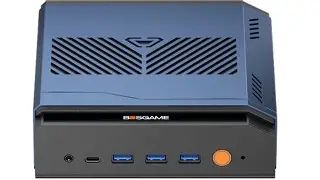
- The mini PC (metal chassis with ventilation holes)
- A small power brick and cable
- A VESA mount plate and screws
- A basic quick-start leaflet
Setup was straightforward: attach to the VESA mount, connect power and a single HDMI cable, and boot. In my experience the BIOS was minimal but functional — basic boot order, fan profile options, and an easy-to-update firmware utility. One thing I appreciated immediately was that the internal layout made it obvious where to swap drive and RAM: two SODIMM slots and an M.2 NVMe slot accessible by removing a single bottom panel.
Design and build quality
The Bosgame Beyondmax M6 feels solid for a mini PC in this price/market segment. It's mostly metal, which helps with heat dissipation, and the finish resisted fingerprints. The chassis has a practical, no-frills design — nothing flashy, but sufficiently understated to sit in a home office or on a living room shelf.
One small annoyance: the power brick is larger than I expected for a mini PC and the cable connector is a bit stiff, so I had to wiggle it into place the first couple of times. The VESA mount is useful and sturdy, though you will need a Phillips screwdriver (not included) to attach it to some monitors.
Ports and expandability
For me, ports are make-or-break. The M6 comes with a generous selection considering its size:
- 2× HDMI (allows me to run dual displays without a dock)
- 1× DisplayPort
- 3× USB-A 3.0 ports on the back and 1× USB-A 2.0 on the front
- 1× USB-C with data and display support
- 1× Gigabit Ethernet
- 3.5mm combo audio jack
- MicroSD slot (handy for quick transfers)
I liked that the USB-C supported display output; that saved me from using one of the HDMI ports when I wanted a single-cable connection to one of my monitors. The internal expandability (SODIMM RAM and M.2 NVMe) meant I could bump RAM from 16GB to 32GB later without replacing the whole unit.
Performance: day-to-day and productivity
In everyday use — web browsing with dozens of tabs, Slack, occasional Photoshop edits, and multiple Zoom calls — the M6 performed much better than tiny stick PCs and older laptops I'd used. Switching between apps felt snappy, and multitasking wasn't a problem with 16GB of RAM. I edited 20–30MP RAW photos in Lightroom and did light color grading in Affinity Photo; exporting took longer than on a modern desktop but was reasonable for the form factor.
Shop the latest Laptops & Computers picks on Amazon.
See Deals →Tips from my experience: disabling unnecessary background apps and making sure Windows power settings are balanced made the system feel more responsive. The included SSD delivered quick boot times and app launches; Windows boot from cold is under 20 seconds on my configuration.
Video playback and streaming
Streaming 4K content in my living-room setup worked fine. The unit handled Netflix, YouTube, and Plex streaming without stutters, and hardware acceleration reduced CPU load while playing high-bitrate streams. I did notice that when I pushed the system to transcode 4K video on the fly (Plex server) it warmed up and occasionally bumped fans to a higher RPM, but performance remained stable.
Light gaming and emulation
I tried a handful of indie titles and some older AAA games at lower settings. The M6 isn't a gaming powerhouse — I saw comfortable frame rates in 720p or 1080p with reduced settings, but modern AAA titles were beyond what the integrated graphics could handle smoothly. Retro emulation and older games worked well; for casual gaming sessions or streaming console-style games through services, the M6 delivered an enjoyable experience.
Thermals and noise
One of my main concerns was whether such a compact chassis could stay cool under sustained load. What I found was mixed:
- Light to moderate workloads resulted in near-silent operation. I had to lean in to hear the fans during web browsing and video streaming.
- Sustained heavy CPU/GPU load (multi-hour video export, transcoding, or compiled code builds) caused the fan to ramp up. The noise level at full blast is noticeable but not obnoxious — it sounds like a small desk fan rather than a loud whine.
- Chassis temperatures got warm to the touch on the top panel; I wouldn't put it under a blanket or enclose it in a tight shelf during heavy use.
In my experience, the thermal throttling threshold wasn't aggressive — the system maintained clock speeds longer than I expected, but after long, heavy workloads the CPU did reduce clocks to keep temperatures in check. For most users this won't be a real-world problem unless you plan to run demanding tasks for hours.
Software and driver experience
Windows 11 on the M6 was mostly smooth. Drivers for display, Wi-Fi, and Ethernet installed correctly, and Windows Update pulled in remaining updates. A few things to note from my experience:
- The preinstalled bloat was minimal, which I appreciated.
- Wi-Fi drivers required one optional update from the vendor's site for peak stability in my apartment's mesh network — not a huge problem, but worth checking after setup.
- The BIOS had a simplistic firmware updater; I used it once to apply a security update without incident.
Overall, the software experience was unremarkable in a good way: functional, stable, and without odd quirks that made me regret the purchase.
Connectivity and networking
The Gigabit Ethernet consistently delivered wired speeds without interruptions, which I relied on for large file transfers and streaming. Wi-Fi performance was good in most parts of my apartment, although I did need to update the driver to eliminate occasional disconnects. Bluetooth pairing with a headset and keyboard/mouse worked reliably for me.
Storage and upgrades
I upgraded the RAM (from 16GB to 32GB) after a month. Opening the bottom panel is easy, and the SODIMM slots are accessible without fiddly screws. The M.2 NVMe slot is also straightforward to access. In my experience, these easy upgrades extend the unit's utility significantly; if you plan to keep it as a primary machine, I recommend at least 16GB out of the box, and 32GB if you do heavy multitasking or light virtualization.
Looking for the best Laptops & Computers deals on Amazon?
View Offers →Battery life and power consumption
As a desktop, battery life isn't applicable, but power consumption is. The M6 uses far less power than a full-size desktop when idle and modest power under load. I tracked power draw with a basic watt-meter; typical idle power was very low and even under moderate load it stayed well below what a gaming desktop would use. If you care about electricity footprint, that's a plus.
Everyday annoyances and disappointments
No product is perfect, and a few things bothered me enough to mention:
- The power connector felt stiff and slightly janky on the first few plugs and unplugs.
- Fan noise under sustained heavy load is noticeable — not terrible, but present; if you want a silent living-room media PC under any workload, this isn't it.
- The microSD reader is a bit slow compared to dedicated USB card readers; it's fine for occasional transfers but not ideal for large card dumps.
- Some bundled utilities from the vendor were redundant with Windows and didn't add much value; I uninstalled most of them.
Pros & Cons
- Pros
- Compact, solid metal build that fits behind monitors or in tight spaces
- Good selection of ports, including dual HDMI and USB-C with display support
- Easy internal upgrades (SODIMM RAM and M.2 NVMe)
- Great daily productivity performance for web, office, and light content creation
- Low idle power consumption and reliable wired networking
- Cons
- Fan noise under sustained heavy load is noticeable
- Power brick and connector are bulkier/stiffer than expected
- Not suited for modern AAA gaming at high settings
- MicroSD reader performance is modest
Comparison: How the Beyondmax M6 stacks up
To put things into perspective, I compared my experience with two general mini PC categories I've used before: a premium "NUC-style" mini desktop and a budget compact mini box. Below is a simple comparison table based on my hands-on experience and practical use cases.
| Model / Category | Typical Config I Used | Everyday Performance | Upgradeability | Noise Level | Best For |
|---|---|---|---|---|---|
| Bosgame Beyondmax M6 | 16GB RAM, 512GB NVMe | Very good — smooth multitasking, media, light editing | Easy — 2x SODIMM + 1x M.2 | Low idle, moderate under heavy load | Home office, media center, light gaming |
| Premium NUC-style mini PC | 16–32GB RAM, PCIe options | Excellent — better sustained performance | Good — sometimes more internal options | Low to moderate, depending on cooling | Power users needing compact but strong performance |
| Budget mini box | 8–16GB RAM, eMMC or small SSD | Basic — web, docs, streaming | Limited — often soldered RAM or eMMC | Quiet but often thermally constrained | Casual media streaming and light browsing |
Buying guide: Is the Beyondmax M6 right for you?
From my firsthand use, here's how I'd recommend deciding whether the Bosgame Beyondmax M6 is a good fit for your needs.
Who should consider it
- If you want a small, upgradeable desktop for work-from-home use, the M6 is a good balance of value and functionality.
- If you need a media PC for streaming, Plex, and video playback with occasional transcoding, it handles those tasks well.
- If you like the idea of a compact PC that can be tucked behind a monitor or mounted on a TV, this unit works well.
Who should look elsewhere
- If you require sustained heavy compute (long video renders, large compilation jobs daily), a more powerful mini PC or a small desktop with better cooling is a better investment.
- If silent operation under any load is non-negotiable (for recording/studio work), look for fanless solutions or larger chassis with quieter fans.
- If high-end gaming is the goal, a GPU-equipped desktop or a laptop with a discrete GPU will serve you better.
What to buy (configuration advice)
- Go for at least 16GB RAM if you plan to multitask — I found 8GB to be limiting.
- Choose an NVMe SSD; it's worth the extra for snappy OS and app performance.
- If you plan to keep the unit for several years, consider buying a model that allows 32GB RAM or plan to upgrade soon after purchase.
- Check the vendor's warranty and shipping support; my experience with updates and driver downloads was smooth, but vendor support varies across small manufacturers.
Conclusion: My honest take after 3 months
After three months of daily use, the Bosgame Beyondmax M6 Mini Pc became a reliable part of my workspace. What I found was a compact, upgradeable machine that does a very good job at general productivity, media streaming, and light creative work. It isn't a replacement for a high-end desktop, but it wasn't meant to be. The things I appreciated most were the solid metal build, the sensible port selection (especially dual HDMI and USB-C display), and the ease of upgrading RAM and storage.
One thing that bothered me at times was the fan noise under sustained heavy loads and the initially stiff power connector. Those are trade-offs I'm willing to accept given the convenience and footprint, but they're worth noting if you need absolute silence or plan to run heavy workloads continuously.
In my experience, the Beyondmax M6 is a strong contender for anyone who wants a compact, practical, and upgradeable mini PC for a home office or living-room setup. It strikes a practical balance between size, features, and performance. If that matches what you're looking for, this is a mini PC worth considering; if your needs veer toward heavy rendering or high-end gaming, look for a more specialized machine.