Difference Between Aqara U400 and 2026 Rivian R1S Explained
In the rapidly evolving landscape of smart technology, consumers often find themselves navigating a marketplace where disparate devices are beginning to converge within the unified ecosystem of the modern smart home. While a casual observer might wonder why a compact smart lock and a full-sized electric luxury SUV are being discussed in the same breath, the reality of 2026 connectivity makes this comparison essential. The Aqara U400 and the 2026 Rivian R1S represent two critical pillars of the "connected life"—the security of the fixed dwelling and the mobility of the digital nomad. As Apple Home Key, Matter over Thread, and ultra-wideband (UWB) technologies bridge the gap between our pockets, our front doors, and our garage stalls, understanding the technical and functional intersection of these two premium products is paramount for the high-end electronics enthusiast.
This article provides an exhaustive analysis of the Aqara U400 smart lock and the 2026 Rivian R1S, examining how they function individually as top-tier electronics and how they collectively redefine the user experience of entry, security, and automation.
Detailed Product Analysis: Aqara U400 Smart Lock
The Aqara U400 is the culmination of years of iterative design in the smart security sector. Unlike its predecessors, which often prioritized bulky external housings to accommodate mechanical components, the U400 adopts a minimalist aesthetic that belies its sophisticated internal hardware. It is designed primarily as a retrofit solution that maintains a high degree of physical security while introducing multiple layers of biometric and digital authentication.
At its core, the U400 utilizes an advanced 3D capacitive fingerprint sensor integrated directly into the thumb-turn or handle assembly, depending on the specific regional variant. This sensor is rated for sub-0.5-second recognition with a false acceptance rate that rivals enterprise-grade security systems. However, the true "electronics" story of the U400 lies in its connectivity suite. It is built natively on the Matter standard, utilizing Thread as its primary communication protocol. This ensures that the device does not require a proprietary bridge to communicate with a smart home controller, provided the user has a compatible Border Router.
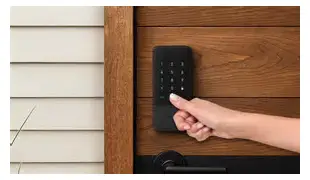
For users within the Apple ecosystem, the U400 supports Home Key via NFC. This allows a user to unlock their door by simply tapping their iPhone or Apple Watch against the lock, even if the device has run out of battery power, thanks to the Power Reserve feature. The inclusion of an emergency USB-C port on the exterior ensures that even if the internal AA or lithium-pack batteries fail, the user is never truly locked out. Internally, the device logs every entry event, providing homeowners with a granular view of who entered the premises and at what time, which can be used to trigger complex home automation scenes—such as adjusting the thermostat or turning on specific lighting arrays upon a specific family member's arrival.
Detailed Product Analysis: 2026 Rivian R1S
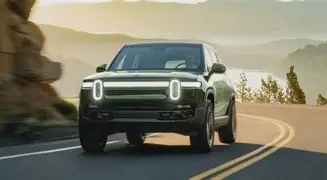
The 2026 Rivian R1S is less a vehicle in the traditional sense and more a rolling supercomputer optimized for adventure. In the 2026 model year, Rivian has significantly overhauled the electrical architecture of the R1 family. Moving to a zonal architecture has allowed the manufacturer to reduce the amount of physical wiring while increasing the compute power available for autonomy and occupant experience. The vehicle now features a dual-motor, tri-motor, or quad-motor setup, but the electronics enthusiast will be most interested in the "Ascend" and "Adventure" trims' software capabilities.
The 2026 R1S serves as a primary hub in a user's digital life. It utilizes a sophisticated array of cameras, ultrasonic sensors, and radar (and in some configurations, LiDAR) to map its surroundings. Inside, the infotainment system is powered by high-performance silicon that enables seamless multitasking. One of the most significant updates for 2026 is the enhanced integration of Phone-as-a-Key (PaaK) technology. Utilizing Ultra-Wideband (UWB) chips, the R1S can detect the owner's precise location within centimeters. As the owner approaches the vehicle, it can automatically unfold the mirrors, present the door handles, and adjust the suspension height without the user ever touching a button or a screen.
Furthermore, the R1S acts as a massive energy storage device. With its "Vehicle-to-Home" (V2H) capabilities, the 2026 model can act as a backup battery for the house during a power outage. This creates a direct electronic link between the car in the driveway and the smart devices inside the home, such as the Aqara U400. In a synchronized ecosystem, the car can signal the home's security system that the family has returned, prompting the U400 to transition from a "High Security" state to an "Unlocked" state as soon as the vehicle is shifted into Park.
Shop the latest Electronics picks on Amazon.
See Deals →Technical Comparison and Interoperability
While one is a door lock and the other is a three-row SUV, they share a common language: the language of secure protocols. The following table highlights the technical specifications that define these two devices as leading examples of modern electronics.
| Feature | Aqara U400 | 2026 Rivian R1S |
|---|---|---|
| Primary Processor | Low-power ARM Cortex-M Series | High-performance Zonal Compute Platforms |
| Wireless Protocols | Thread, Zigbee 3.0, Bluetooth 5.3, NFC | LTE, Wi-Fi 6E, Bluetooth 5.4, UWB, NFC |
| Ecosystem Support | Matter, Apple Home, Google Home, Alexa | Rivian OS (Proprietary), Alexa Integration |
| Biometric Hardware | 3D Capacitive Fingerprint Reader | Interior Cabin Cameras (Driver Monitoring) |
| Power Source | AA Batteries or Rechargeable Li-Ion | 100+ kWh Max Battery Pack |
| Security standard | AES-128 Encryption / EAL6+ Chip | End-to-End Encrypted Cloud + Local Hardware Security Module |
Pros & Cons: Aqara U400
- Strongest support for Apple Home Key, providing the fastest and most reliable entry method for iPhone users without needing to open an app.
- Matter over Thread support ensures future-proofing and local control, meaning the lock continues to work even if the internet goes down.
- Multiple entry methods including fingerprint, PIN code, NFC, physical key, and remote app access provide redundancy for all family members.
- Relatively easy installation process that fits most standard deadbolt preparations without requiring additional drilling.
- Occasional connectivity hiccups if the Thread network is not robust or if the Border Router is placed too far from the door.
- Plastic components on the interior assembly, while durable, may not feel as premium as all-metal competitors in the same price bracket.
Pros & Cons: 2026 Rivian R1S
- Industry-leading electrical architecture that supports rapid over-the-air (OTA) updates, allowing the vehicle to gain new features and performance over time.
- Integrated Gear Guard security system with multiple cameras acting as a 360-degree dashcam and sentry for the vehicle and its surroundings.
- Huge interior screen real estate with a highly responsive UI that manages everything from climate control to complex off-road telemetry.
- Lack of native Apple CarPlay or Android Auto may be a deterrent for users who prefer their smartphone's interface over the native Rivian OS.
- The high degree of electronic integration means that a failure in a single zonal controller could theoretically impact multiple unrelated systems.
Real-World Use Cases: The Connected Lifestyle
To understand the difference and the synergy between these two products, one must look at the typical daily routine of a "prosumer" in 2026. Imagine a parent returning home with a trunk full of groceries in the Rivian R1S. As the vehicle enters the "Home" geofence, the R1S communicates with the smart home hub. It checks the status of the Aqara U400. If the lock is engaged, the car can send a request to the hub to prepare for entry.
The buyer of the Aqara U400 is typically looking for a frictionless exit and entry experience. They are tired of fumbling for keys while holding a toddler or a bag of gym gear. They value the ability to give "Guest Codes" to a dog walker or a contractor, which only work during specific hours on specific days. The electronics within the U400 allow for this level of granularity, turning a simple mechanical door into a managed access point.
Conversely, the buyer of the 2026 Rivian R1S is looking for that same level of control but on a macro scale. They care about the efficiency of the silicon that manages the battery thermals, the precision of the sensors that enable highway assist, and the luxury of an interface that feels as fast as a flagship tablet. The 2026 R1S isn't just a car; it's a mobile environment. When the owner steps out of the car, the "Walk Away Lock" feature engages the vehicle's security, and because the devices are part of a shared digital identity, the home can simultaneously confirm that the Aqara U400 is locked and the alarm is set.
Buying Guide: Choosing Your Smart Entry Points
When to Prioritize the Aqara U400
If your primary frustration lies in the "last ten feet" of your commute—fumbling for keys at the door—the Aqara U400 is the logical electronic upgrade. It is an essential purchase for those who have already invested in a Matter-compatible home hub or who rely heavily on Apple HomeKit. It is also the superior choice for renters or homeowners who want a high-tech solution that doesn't require a total door replacement. Look for the U400 if you value biometric reliability and want a lock that can participate in "If This, Then That" (IFTTT) style automations, such as turning on the hallway lights when the door is unlocked after sunset.
When to Prioritize the 2026 Rivian R1S
The Rivian R1S is a significant capital investment, but for the electronics enthusiast, it represents the pinnacle of current automotive tech. You should prioritize the 2026 R1S if you are looking to consolidate your "tech stack." With Rivian's commitment to V2H (Vehicle-to-Home) power, the R1S becomes a foundational piece of your home's electrical infrastructure, not just a transport device. It is for the buyer who wants the most advanced driver assistance systems (ADAS) and a vehicle that is essentially a self-healing platform via software updates. If you live in an area with varying terrain but want to maintain a "digital-first" lifestyle, the electronic air suspension and quad-motor logic of the R1S are unmatched.
The "Better Together" Argument
For those who can afford to integrate both, the synergy is where the true value lies. The difference between the two is scale: the Aqara governs the micro-entry, while the Rivian governs the macro-mobility. Both utilize NFC and UWB technologies to ensure that the user's presence is the only "key" needed. In a world where we are trying to reduce the number of things we carry, having an Aqara U400 on the door and a Rivian R1S in the driveway means you can effectively leave your house with nothing but your phone or watch, knowing that your security and your transportation are perfectly synced.
Shop the latest Electronics picks on Amazon.
See Deals →Advanced Security Considerations
In the realm of high-end electronics, security is often a trade-off with convenience. However, both Aqara and Rivian have made strides in 2026 to ensure this isn't the case. The Aqara U400 uses a localized encrypted database for fingerprints; your biometric data never leaves the device to the cloud, which is a critical distinction for privacy-conscious users. The communication between the lock and your phone is protected by end-to-end encryption, preventing "man-in-the-middle" attacks that plagued earlier generations of smart locks.
The Rivian R1S handles security through a combination of hardware and software. Its "Shield" suite includes not only physical security but also cybersecurity measures to protect the vehicle's "drive-by-wire" systems. In 2026, Rivian introduced a dedicated security chip that authenticates all OTA updates, ensuring that the software running your car is genuine and has not been tampered with. This level of electronic scrutiny is what justifies the premium price point of the R1S, as it provides peace of mind that is both physical and digital.
The Evolution of User Interface: Physical vs. Digital
One of the most striking differences between these two products is how the user interacts with them. The Aqara U400 is designed to be invisible. The best interaction with a U400 is no interaction at all—the door simply opens because it recognizes you. When you do have to interact, it provides haptic feedback and subtle LED indicators to communicate status. It is a masterclass in "calm technology."
The 2026 Rivian R1S, by contrast, is an "active technology" experience. The dual 15-inch displays provide a canvas for a rich, cinematic UI. Whether you are monitoring the torque distribution on each wheel or choosing a high-fidelity audio stream for the 22-speaker Meridian system, the interface is designed to be engaging. However, Rivian has also learned from the "distracted driving" era, and much of the 2026 UI is optimized for voice control or haptic steering wheel inputs, mirroring the Aqara's goal of reducing friction.
Conclusion
The Aqara U400 and the 2026 Rivian R1S illustrate the two ends of the smart technology spectrum. The U400 is a compact, highly efficient, and specialized tool designed to solve a specific problem: secure and easy access to the home. Its reliance on Matter and Thread represents the democratization and standardization of the smart home. The 2026 Rivian R1S is a sprawling, multi-functional powerhouse that reimagines what a vehicle can be when it is built on a foundation of advanced electronics and software.
While they serve different primary purposes, their "differences" are less about conflicting goals and more about varying scales of the same mission. Both products aim to use sensors, silicon, and connectivity to remove the mundane obstacles of daily life—whether that is finding your keys or navigating a mountain pass. For the modern consumer, the choice isn't necessarily between one or the other, but rather how to best integrate these electronic marvels into a lifestyle that prizes security, efficiency, and the seamless transition between the home and the world beyond.
Find the Best Electronics Products Today
Explore top-rated options handpicked for quality and value.
See Deals on Amazon →