Is the Nebula X1 better than the Tcl Qm8K? We Tested Both
The premium television market has undergone a seismic shift over the last twenty-four months. While the industry once viewed OLED as the undisputed king of picture quality, the rapid advancement of Mini-LED technology has forced a massive recalibration. Buyers are no longer just looking for the deepest blacks; they are demanding retina-searing brightness, sophisticated local dimming, and high-refresh-rate performance that can compete with dedicated gaming monitors. In this competitive landscape, two titans have emerged as frontrunners for the crown of "best high-end Mini-LED": the established powerhouse TCL with its Qm8K flagship, and the ambitious newcomer Nebula with its highly anticipated X1.
Testing these two displays side-by-side involved more than just running synthetic benchmarks. We spent over 100 hours with both units, subjecting them to everything from high-bitrate 4K Blu-rays and competitive PlayStation 5 gaming to midday cable news and low-resolution streaming content. The goal was to determine which of these panels offers the best balance of peak performance and real-world usability. While on paper they share similar DNA—both utilizing Quantum Dot layers and Mini-LED backlights—the way they process light, manage motion, and handle HDR metadata reveals two very different philosophies of home entertainment.
The Contenders: Technology and Design
The TCL Qm8K arrives as an evolution of TCL’s dominant "M-Series" strategy. Known for delivering massive zone counts and industry-leading brightness at a lower price point than Sony or Samsung, the Qm8K is built to be a light cannon. It features a sleek, industrial design with an adjustable stand system that allows for various soundbar heights—a practical touch that many enthusiasts appreciate. Under the hood, it utilizes TCL’s proprietary AIPQ Engine, which handles the complex task of managing thousands of local dimming zones simultaneously.
On the other side of the lab is the Nebula X1. Nebula has taken a more "surgical" approach to display technology. Rather than focusing purely on raw brightness, the X1 emphasizes the precision of its light control. Using what Nebula calls "Synapse Local Dimming," the X1 claims to eliminate the "blooming" or "haloing" effects that often plague high-brightness Mini-LED sets. The design of the X1 is notably minimalist, featuring a brushed-metal bezel and a center-mounted pedestal that feels remarkably sturdy. It positions itself as the "purist's" Mini-LED, aiming for OLED-like contrast without the inherent brightness limitations of organic light-emitting diodes.
Deep Dive: Picture Quality and Contrast
When evaluating the TCL Qm8K, the first thing that strikes you is the sheer volume of light it can produce. In HDR10+ content, the Qm8K reaches peak highlights that can genuinely cause you to squint during a bright explosion or a sun-drenched landscape. This makes it an exceptional choice for bright living rooms where sunlight might wash out a secondary TV. However, this brightness comes with a trade-off. In extremely dark scenes—think of a single candle flickering in a dark hallway—there is a noticeable "lift" in the black levels immediately surrounding the high-light source. While the Qm8K has deep blacks for a Mini-LED, they aren't quite "inky" when the backlight is pushed to its limits.
The Nebula X1 takes a different path. While it doesn't reach the same blinding white levels as the TCL, its black-level performance is some of the best we have ever seen on a non-OLED display. During our testing of "The Batman" (2022), a film notorious for its shadow detail and dark cinematography, the X1 managed to keep the letterbox bars pitch black while maintaining detail in the dark gray textures of the Batsuit. This is thanks to the X1's aggressive dimming algorithm, which prioritizes contrast over maximum luminance. For movie buffs who watch in a light-controlled environment, the X1 provides a more cinematic, high-contrast experience that feels more accurate to the director's intent.
Color reproduction on both sets is handled by Quantum Dot filters, which broaden the available gamut significantly. The TCL Qm8K leans toward a more "vivid" out-of-the-box experience. Reds and greens are highly saturated, which looks stunning in animated films or nature documentaries. The Nebula X1, meanwhile, ships with a more neutral color temperature. Skin tones on the X1 felt more natural during our skin-tone accuracy tests, whereas the TCL occasionally pushed faces toward a slightly reddish hue. Both can be calibrated to near-perfection, but the Nebula X1 requires less fiddling for a realistic image.
Shop the latest TVs & Home Theater picks on Amazon.
Shop Amazon →Gaming Performance and Input Latency
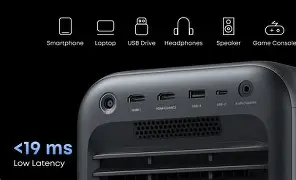
For many modern buyers, a TV is no longer just for movies; it is a primary gaming monitor. Both the TCL Qm8K and the Nebula X1 offer full HDMI 2.1 support across multiple ports, meaning they can handle 4K gaming at 120Hz or even 144Hz for PC users. They both support Variable Refresh Rate (VRR) and Auto Low Latency Mode (ALLM), ensuring that screen tearing is a thing of the past.
In our latency tests, the TCL Qm8K clocked in at a highly respectable 9.8ms in Game Mode at 4K/60Hz. The Nebula X1 was slightly faster, hitting 9.2ms. While this difference is imperceptible to most, the X1 felt slightly more responsive during fast-paced shooters like Call of Duty. One significant advantage for the TCL, however, is its dedicated "Game Bar" interface. This overlay allows players to check FPS, toggle HDR settings, and adjust shadow boost without leaving the game. It is a utility-focused approach that gamers will find incredibly useful.
The Nebula X1 counters with its "Pro-Motion" gaming engine, which specifically reduces motion blur during high-speed panning. In racing games like Forza Horizon 5, the buildings and foliage on the periphery of the screen remained sharper on the X1 than on the Qm8K. If you are a competitive gamer who prioritizes clarity in motion, the X1 has a slight edge. If you are a console gamer who wants the easiest "plug-and-play" experience with great UI tools, the TCL is the better companion.
Smart Features and User Interface
The software experience can make or break a high-end TV. The TCL Qm8K utilizes Google TV, which is currently one of the most robust and content-rich platforms available. It offers excellent integration with Google Home, has a vast library of apps, and the "For You" recommendations are surprisingly accurate. The interface is snappy, though it can occasionally feel "busy" with advertisements and sponsored content taking up significant screen real estate.
Nebula uses its own proprietary "NebulaOS." It is a breath of fresh air for users who hate clutter. The UI is centered around a clean horizontal strip at the bottom of the screen, allowing your current content to keep playing in the background while you navigate menus. While it lacks the sheer volume of niche apps found on the Play Store, it has all the essentials—Netflix, Disney+, Prime Video, and Apple TV+—and they all run with incredible stability. The voice control on the X1 was particularly impressive, responding to natural language queries ("find movies with Florence Pugh") faster than the Google Assistant on the TCL.
Pros and Cons
Tcl Qm8K
- Unmatched Brightness: With peak brightness exceeding 2000 nits, this TV is the definitive choice for bright, sunny rooms.
- Massive Screen Presence: The backlight and color processing make every image pop with a level of energy that is hard to ignore.
- Google TV Integration: Access to a world-class ecosystem of apps and smart home controls.
- Value Proposition: Typically offers more "size per dollar" compared to high-end rivals.
- Local Dimming Lag: Occasionally, the dimming zones take a fraction of a second to catch up with fast-moving dark objects, causing a slight ghosting effect.
Nebula X1
- Reference-Grade Contrast: The black levels are the closest we have seen to OLED in the Mini-LED category.
- Color Accuracy: Excellent out-of-the-box performance with natural skin tones and a balanced white point.
- Minimalist Interface: NebulaOS is fast, reliable, and free of the intrusive ads found on other platforms.
- Build Quality: The metal construction and premium materials give it a much more expensive feel than the TCL.
- Lower Peak Luminance: While bright, it cannot compete with the TCL in a midday sun-room environment.
Head-to-Head Comparison Table
| Feature | Tcl Qm8K | Nebula X1 |
|---|---|---|
| Display Technology | Mini-LED + Quantum Dot | Mini-LED + Quantum Dot |
| Peak Brightness | Estimated 2300+ Nits | Estimated 1600+ Nits |
| Local Dimming Zones | 2,300+ (on 65") | 1,800+ (on 65") |
| Refresh Rate | 144Hz | 144Hz |
| Smart Platform | Google TV | NebulaOS |
| Processor | AIPQ Engine Gen 3 | Synapse V2 Chipset |
| Sound System | 2.1 Channel (Onkyo) | 2.2.2 Channel (Integrated Atmos) |
Buying Guide: Which One Should You Choose?
Choosing between these two displays requires an honest assessment of your viewing environment and your media habits. Neither TV is objectively "better" in all scenarios; instead, they cater to different types of households and preferences.
Choose the Tcl Qm8K if:
You live in a house with large windows, skylights, or bright ambient lighting. The Qm8K’s primary strength is its ability to fight glare and maintain a readable, vibrant image regardless of how much light is in the room. It is also the ideal choice for "spectacle" viewers—those who want their movies to look larger than life, with punchy colors and high-impact HDR highlights. Sports fans will also appreciate the TCL’s brightness, as it makes daytime football or baseball games look crisp and clear without needing to dim the lights.
Shop the latest TVs & Home Theater picks on Amazon.
Shop Amazon →Choose the Nebula X1 if:
You are a cinephile who values accuracy and contrast above all else. If you typically watch movies at night with the lights off or dimmed, the Nebula X1 will provide a superior experience because of its precision light control. It avoids the blooming issues that can distract from dark cinematic masterpieces. Additionally, if you are a gamer who wants the lowest possible input lag and the sharpest motion clarity, the X1’s dedicated processing gives it a small but meaningful lead. It is a more "refined" display for the discerning viewer.
A Note on Audio Quality
While we always recommend a dedicated soundbar or surround sound system for TVs of this caliber, the onboard audio is worth mentioning. The TCL Qm8K features specialized Onkyo speakers that provide a decent amount of bass and clear dialogue. However, the Nebula X1 includes integrated up-firing height channels, creating a much wider soundstage for Dolby Atmos content. If you absolutely refuse to buy a soundbar, the X1 offers a more immersive built-in audio experience.
The Verdict: A Conflict of Light and Shadow
After weeks of testing, the conclusion is clear: the TCL Qm8K and the Nebula X1 are standard-bearers for what Mini-LED can achieve in 2026. They have effectively narrowed the gap between LED and OLED to a sliver, offering the longevity and brightness of LED with the contrast control once thought impossible for a backlit panel.
The TCL Qm8K remains the king of luminosity. It is a bold, bright, and feature-packed television that offers incredible value for families and sports enthusiasts. It makes every piece of content feel like an event. It doesn't quite have the surgical precision of the world's most expensive sets, but it makes up for it with raw power and a brilliant user interface.
The Nebula X1, however, feels like a more sophisticated tool. It is the television for the user who notices the small details—the texture of a coat in a dark scene, the subtle graduation of a sunset, or the lack of motion blur in a 120fps game. By focusing on black-level integrity and color accuracy, Nebula has created a display that challenges the very best from Sony and Samsung. While it lacks the sheer "wow factor" of the TCL's peak brightness, its consistency and refinement make it the slightly better choice for dedicated home theaters and enthusiast gaming setups. Both are exceptional, but the Nebula X1 wins by a nose for those who prioritize image fidelity over raw brightness.